The World Young Women’s Christian Association (World YWCA)
February 2026
Citation: World YWCA. (2026). Technology-Facilitated Gender-Based Violence and Young Women’s Civic Participation: Implementation Evidence from Egypt, Kenya, Palestine and South Sudan. World YWCA.
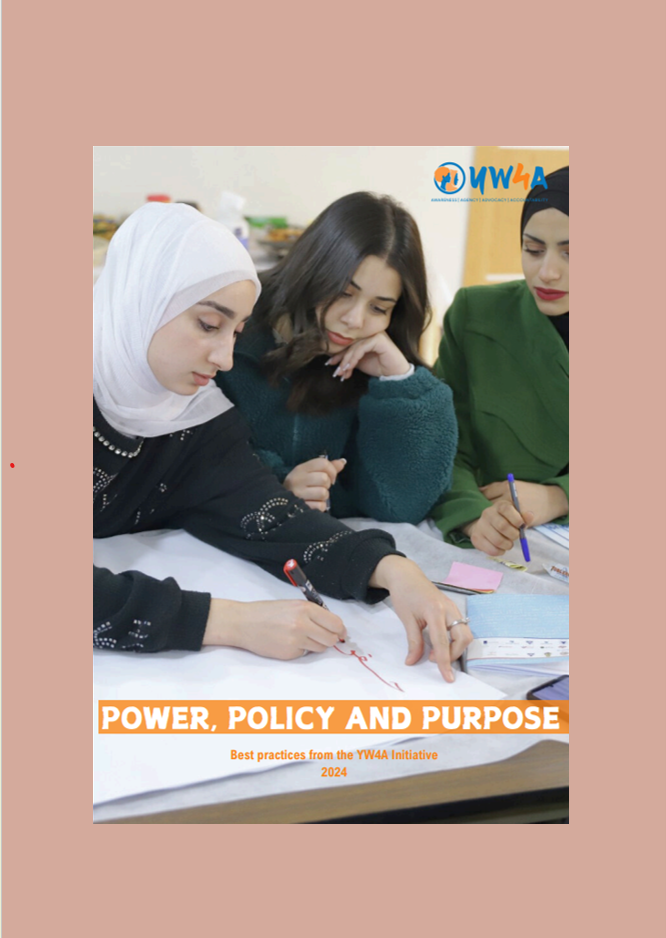
From 2021 to 2025, the World YWCA led the Young Women for Awareness, Agency, Advocacy and Accountability (YW4A) initiative across Egypt, Kenya, Palestine and South Sudan under the Netherlands Ministry of Foreign Affairs Power of Women framework. The programme invested in strengthening young women’s leadership, reinforcing women’s rights and faith-based organisations, transforming restrictive gender norms, and influencing legal and policy reform on sexual and gender-based violence and participation rights.
The YW4A supported more than 13,700 young women in developing leadership competencies, engaging in collective action, and participating in structured legal and policy advocacy processes. The programme assessed and strengthened 23 women’s rights organisations using the Advocacy and Organisational Capacity Assessment methodology and training, also also engaged 18 faith-based organisations in structured gender capacity transformation processes (Manders, 2025; Faith to Action Network, 2025). Advocacy initiatives contributed to engagement across 21 targeted legal and policy processes, including reform discussions on family law, child marriage, workplace harassment and SGBV implementation gaps (Equality Now, 2025).
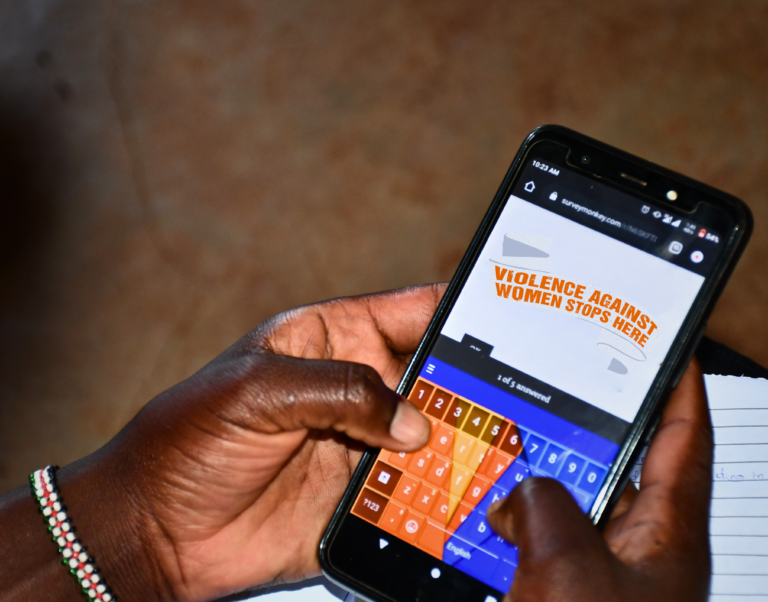
As young women increased public visibility through media engagement, public dialogues, coalition mobilisation and interaction with decision-makers, exposure to digital harassment and reputational attacks increased. Programme monitoring, endline findings and published reflections, including The Hidden Cost of Digital Violence for Young Women in South Sudan, document consistent patterns linking leadership visibility with technology-facilitated gender-based violence (Eveline, 2025).
This brief contributes to TFGBV research by analysing digital harassment as a participation variable within structured leadership and advocacy programming. Rather than examining online abuse in isolation, it tracks how exposure to digital hostility correlates with escalation in public leadership roles, advocacy visibility and policy engagement in fragile governance contexts. The findings provide implementation-based insights into how TFGBV shapes trajectories of civic participation.
PROGRAMME DESIGN AND EXPOSURE PATHWAYS
YW4A was structured as an integrated model linking organisational strengthening, young women’s leadership development, faith-based social-norm engagement, and legal advocacy. The programme did not treat these components as parallel activities. It sequenced them to move young women from private learning environments into progressively more public roles. Young women first built knowledge, confidence and advocacy skills within structured cohorts. Together with organisational partners, they strengthened their advocacy systems and external engagement strategies. Faith-based institutions engaged in gender capacity processes that enabled more open discussion of rights and participation. These elements converged in legal and policy advocacy, where young women engaged in county dialogues, media campaigns, public forums and interactions with decision-makers.
This progression increased visibility by design. Public positioning on issues such as SGBV, child marriage, family law reform and SRHR required media engagement, coalition representation and online communication. Endline findings confirm that young women assumed more public-facing roles over time, including serving as spokespersons and leading community advocacy (Antillón et al., 2025). As public visibility expanded, digital exposure intensified. The relationship between participation and online hostility became observable across contexts. Increased leadership presence in civic and policy spaces was associated with greater digital backlash. The programme design, therefore, provides a structured lens through which exposure pathways and TFGBV patterns can be analysed.
DOCUMENTED PATTERNS OF DIGITAL BACKLASH
Across all four countries, programme monitoring data, evaluation workshops and qualitative endline interviews consistently linked public-facing advocacy activities with subsequent digital hostility (Antillón et al., 2025; YW4A, 2025). These accounts were repeated patterns observed across cohorts and advocacy cycles. Participants reported coordinated derogatory commentary following media interviews, social media campaigns and policy engagement activities. Harassment frequently included moralised accusations questioning their legitimacy, cultural belonging or religious standing, as well as reputational intimidation directed at them and, in some cases, their families. Hostility intensified around advocacy themes considered socially or politically sensitive, including SGBV, child marriage and SRHR. In these contexts, digital attacks were directly associated with gendered public positioning on rights-based issues rather than general online abuse unrelated to advocacy exposure.
In South Sudan, programme leadership publicly documented that social media platforms were being used to undermine women in leadership roles, portraying them as undeserving of opportunity and questioning their credibility. Staff noted that such attacks discouraged girls who aspired to lead but feared humiliation online (YW4A, 2025). In Egypt, advocacy posts linked to legal reform discussions attracted concentrated hostile responses shortly after publication. In Kenya, digital backlash followed high-visibility county-level campaigns addressing child marriage and SGBV. In Palestine, online criticism escalated rapidly in response to public positioning on gender justice issues within a politically sensitive environment.
The YW4A Mid-Term Review identified shrinking civic space and increased political sensitivity around gender equality across programme countries (Bergson et al., 2023). Where physical mobilisation was constrained, digital platforms became primary arenas of engagement. Digital harassment reflected and amplified broader patterns of contestation. Across contexts, TFGBV tracked leadership visibility and policy engagement activity rather than occurring randomly. In these contexts, digital hostility was directly linked to gendered public positioning on rights-based issues, distinguishing it from general online abuse unrelated to advocacy exposure. Exposure influenced decisions about continued participation and public engagement.
INSTITUTIONAL AND PROGRAMMATIC ADAPTATIONS
Implementation required practical adjustments in response to digital exposure. Advocacy planning incorporated digital risk analysis and mapped likely backlash triggers associated with specific themes and public interventions. In several contexts, communication strategies shifted from reliance on individual spokesperson visibility to collective representation to distribute risk.
- Safe spaces established for leadership development and SGBV response evolved into peer debrief environments where young women processed digital harassment and reinforced solidarity. Endline reflections indicate that collective support reduced withdrawal from advocacy roles and strengthened leadership retention (Antillón et al., 2025).
- Safeguarding systems strengthened over the course of the programme, with documented improvements in organisational capacity (Manders, 2025). These mechanisms expanded to include documentation of digital exposure and referral pathways when harassment affected well-being. This shift recognised digital hostility as a participation risk rather than a peripheral issue.
- YW4A’s engagement with faith-based organisations also influenced local normative environments. Structured gender capacity processes resulted in measurable shifts in institutional leadership commitment to gender justice (Faith to Action Network, 2025). Because digital harassment frequently relied on moral or religious language to delegitimise women leaders, public affirmation by faith leaders supporting women’s dignity and participation contributed to reshaping community narratives in some contexts.
PARTICIPATION RISK AND GOVERNANCE IMPLICATIONS
Evidence from Egypt, Kenya, Palestine and South Sudan highlights several implications for TFGBV policy and research. Leadership development initiatives that escalate public engagement alter participants’ digital risk profile. As young women assume spokesperson roles, engage decision-makers and increase media visibility, exposure to coordinated online hostility rises in parallel. TFGBV therefore operates as a participation filter within contested civic environments, influencing who sustains visibility and who withdraws. Advocacy frameworks must incorporate structured digital risk assessment linked to thematic sensitivity, timing and spokesperson exposure. Safeguarding approaches need to address hybrid civic environments where online and offline risks intersect, recognising digital hostility as a participation risk rather than an ancillary concern. Peer-based collective response mechanisms strengthen leadership sustainability following harassment, while normative institutions, including faith actors, shape the legitimacy and spread of digital hostility. Situating TFGBV within broader civic space analysis strengthens research and policy responses by linking digital abuse to governance dynamics rather than treating it as isolated online behaviour.
These conclusions derive from five years of structured implementation, monitoring systems and independent endline evaluation.
In conclusion, evidence from Egypt, Kenya, Palestine and South Sudan demonstrates that technology-facilitated gender-based violence shapes leadership sustainability within civic participation ecosystems. Increased advocacy visibility correlates with increased digital hostility, and exposure influences decisions about continued public engagement. Integrating digital risk analysis into leadership programming, advocacy design and safeguarding systems strengthens participation outcomes. Multi-country implementation experience provides grounded evidence for governance frameworks that address TFGBV as a structural participation constraint rather than an isolated online harm.
REFERENCES
- Antillón, C., Charara Ruiz, M., & Le Mat, M. (2025). Final YW4A Endline Report Pathway 2: Status of Young Women’s Leadership in Egypt, Kenya, Palestine and South Sudan. KIT Institute.
- Bergson, S., Manders, J., Hallin, R., & Davids, F. (2023). YW4A Mid-Term Review Report (January 2021 – June 2023). KIT Royal Tropical Institute.
- Equality Now. (2025). YW4A Pathway 4 Internal Endline Study: Legal and Policy Advocacy in Egypt, Kenya, Palestine and South Sudan.
- Faith to Action Network. (2025). YW4A Pathway 3 Endline Report: Faith-Based Organisations’ Gender Capacity Assessment.
- Manders, J. (2025). Final YW4A Endline Report Pathway 1: Advocacy and Organisational Capacity in Egypt, Kenya, Palestine and South Sudan. KIT Institute.
- Eveline, B., (2025). The Hidden Cost of Digital Violence for Young Women in South Sudan. World YWCA.